Vinyl Vehicle Wrap vs Paint: The Ultimate North Texas Customization Guide
For car enthusiasts, luxury vehicle owners, and commercial fleet managers across the Dallas-Fort Worth Metroplex, a vehicle is far more than a basic tool for commuting. Instead, it serves as a direct extension of your personal style or a mobile billboard for your business branding. However, maintaining a pristine, jaw-dropping exterior finish in North Texas requires fighting a continuous battle against harsh environmental elements. From intense summer heatwaves that bake exterior surfaces to severe spring hailstorms and abrasive highway gravel along the multi-lane tollways, your vehicle’s outer layer faces constant punishment.
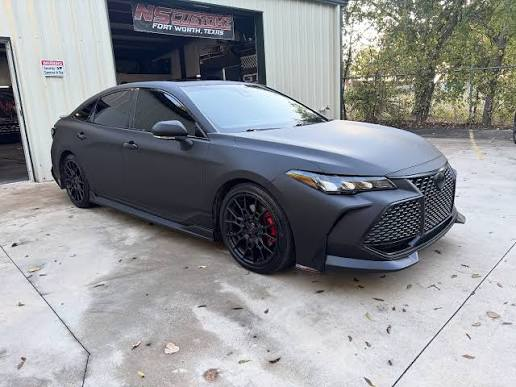
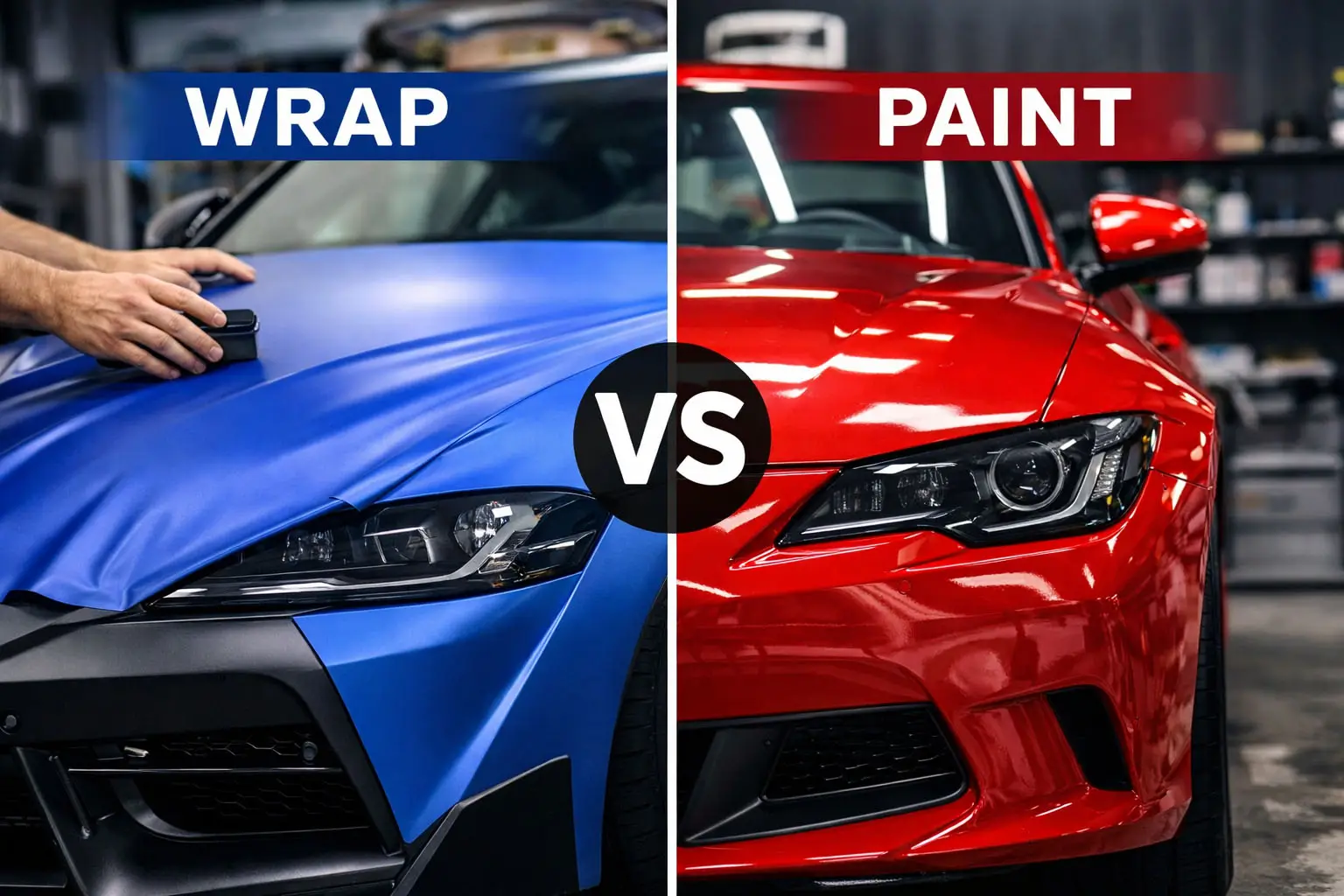
Consequently, when it comes time to refresh a faded exterior or execute a dramatic color transformation, property owners face a critical decision. Specifically, you must evaluate the long-term structural benefits of a vinyl vehicle wrap vs paint application.
Many consumers mistakenly believe that a traditional automotive spray job is the only legitimate method for changing a vehicle’s color or restoring its aesthetic appeal. Fortunately, modern advancements in polymer material science have positioned vinyl graphics as a dominant, highly competitive alternative to conventional liquid finishes. Choosing between these two surface treatments requires analyzing upfront financial expenditures, checking long-term maintenance profiles, and reviewing how each option impacts your vehicle’s ultimate resale value. This comprehensive guide breaks down the technical characteristics of both methods, compares climate resilience traits, and outlines a structured evaluation playbook to help you choose the ideal finish for your asset.
The Core Science: Analyzing Material Behavior and Clear Shields
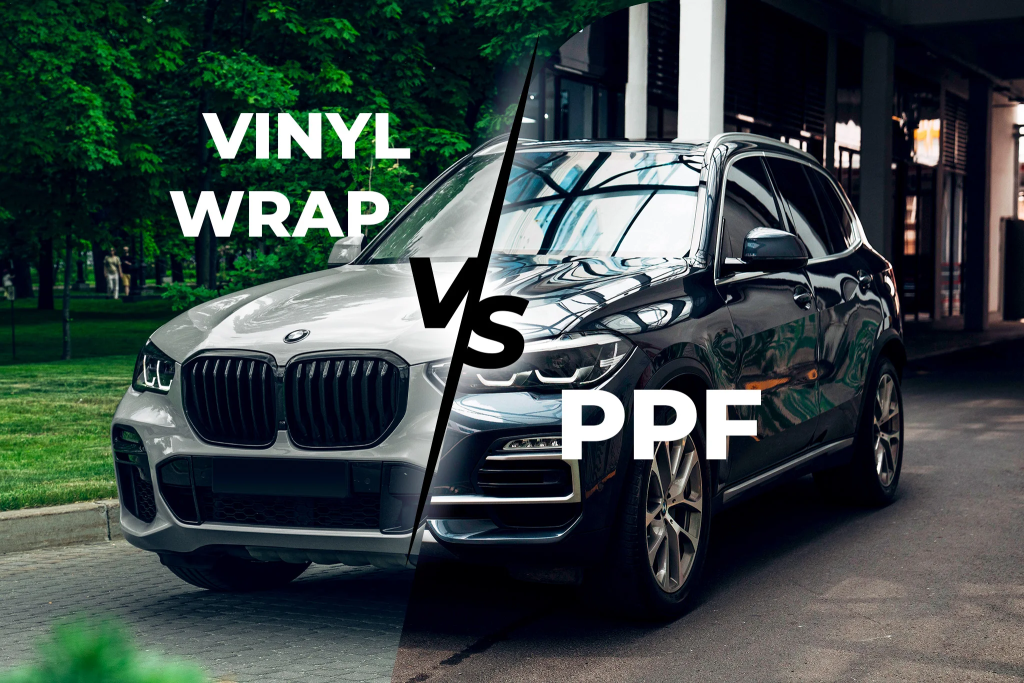
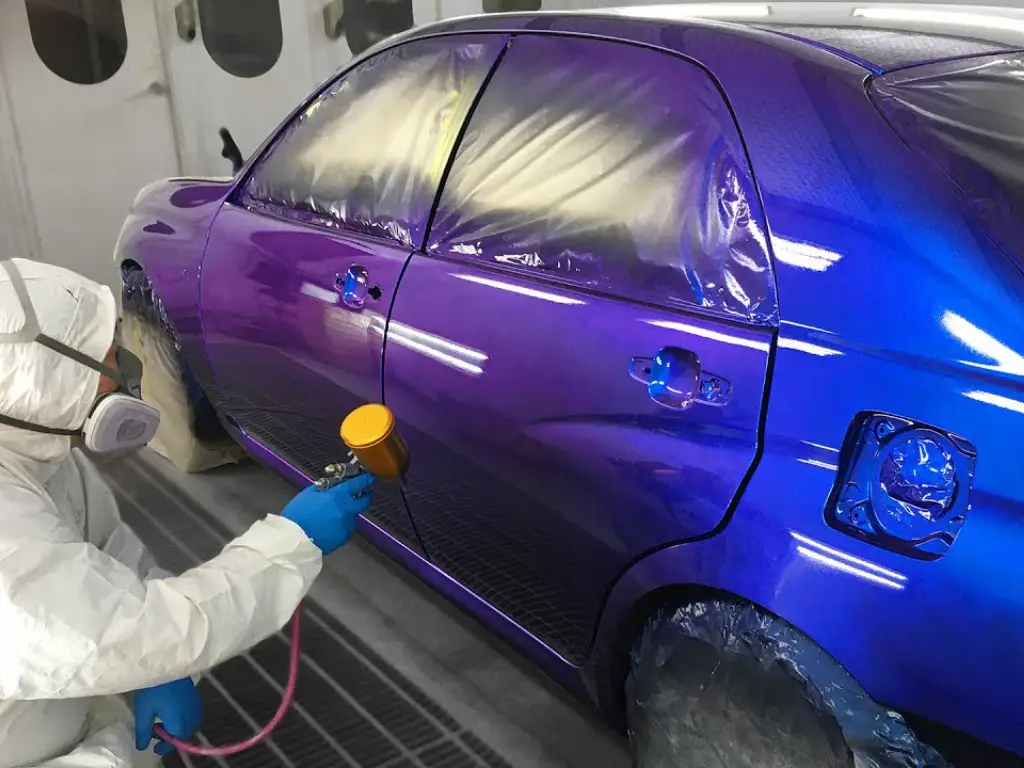
To make an educated choice in the vinyl vehicle wrap vs paint debate, you must understand the structural composition of both surface layers. A traditional factory or aftermarket paint job utilizes a liquid polyurethane coating infused with pigments, which is sprayed directly over an etched primer layer and sealed with a transparent clear coat. This creates a hard, permanent bond with the underlying sheet metal.
Conversely, a premium vehicle wrap utilizes a highly flexible, multi-layered cast polyvinyl chloride (PVC) film. This film features a specialized pressure-activated acrylic adhesive backing.
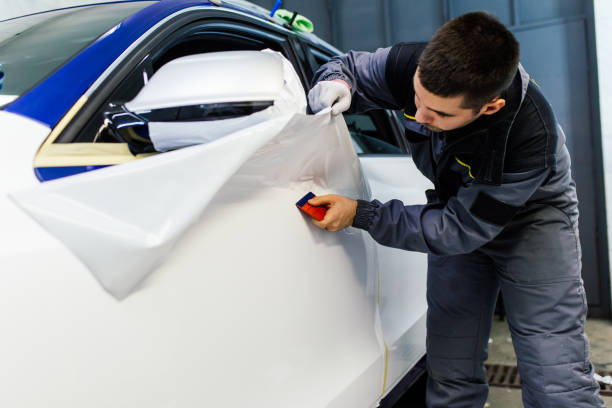
During a professional installation, technicians utilize heat guns to physically stretch and conform the vinyl skin around the complex architectural body contours of the vehicle. The vinyl does not alter the factory finish underneath. In fact, it acts as a non-porous, protective second skin. Consequently, this sacrificial barrier completely isolates your original paint from direct contact with destructive outdoor elements, moisture, and road debris.
Quick Reference: Customization & Performance Comparison Matrix
Before scheduling an appointment with an installation studio or a collision repair shop, it is important to evaluate how both customization methods perform over a multi-year timeline. Review this professional structural matrix to compare your options:
| Performance Metric | Premium Cast Vinyl Wrap | High-End Custom Paint Job | Low-Budget Commercial Paint |
| Upfront Financial Cost | Moderate-Low – Predictable flat-rate packages based on vehicle scale. | Extremely High – Demands intensive disassembly and manual sanding. | Low – Uses inferior single-stage liquids; prone to rapid peeling. |
| Installation Timeline | Rapid – Typically completed in 3 to 5 business days from intake. | Prolonged – Requires 2 to 4 weeks of curing time between coats. | Fast – Completed in a few days, but leaves overspray on trim pieces. |
| UV & Solar Resistance | Outstanding – Built-in UV inhibitors prevent color fading in high heat. | Excellent – Requires continuous waxing or ceramic lock coatings. | Extremely Poor – Chalks, oxidizes, and fades within 12 to 24 months. |
| Reversibility & Resale | 100% Removable – Easily peeled away to reveal pristine factory paint. | Permanent – Permanently alters the asset; reduces exotic car value. | Permanent – Destroys baseline asset value due to poor finish. |
| Finishing Varieties | Infinite – Matte, satin, gloss, chrome, color-shift, and custom prints. | High – Metallic and pearlescent options, but matte finishes are complex. | Limited – Standard solid gloss options with minimal depth. |
Analyzing the Critical Environmental Factors in North Texas
When weighing a vinyl vehicle wrap vs paint configuration for your car, truck, or van, the distinct regional climate of the Great Plains should heavily influence your choice. Local vehicles face distinct atmospheric stressors that are rarely encountered in other regions of the country.
1. Blistering Solar Radiation and Thermal Expansion
The summer sun in North Texas routinely drives ambient temperatures past 100 degrees Fahrenheit, pushing black sheet metal temperatures well above 150 degrees. This intense heat causes continuous thermal expansion and contraction across your vehicle’s metal panels.
Traditional liquid clear coats can become brittle over time as their internal plasticizers dry out under relentless UV rays. As a result, the paint can develop fine micro-cracks, eventually leading to clear coat delamination and oxidation.
In contrast, premium cast vinyl wraps are engineered with advanced elastomeric polymers. These compounds allow the film to expand and contract smoothly alongside the underlying metal panels without cracking or lifting. Furthermore, the vinyl film shields the underlying factory clear coat from UV-induced oxidation, effectively locking in its pristine condition beneath the wrap.
2. Highway Debris and Road Particle Impacts
Commuting along major North Texas transit veins like the Dallas North Tollway, I-635, or I-35E subjects your vehicle’s nose to a continuous barrage of airborne gravel, construction debris, and concrete dust. When a sharp stone strikes a painted panel at highway velocities, it brittlely fractures the clear coat and base coat, creating a permanent paint chip that exposes the raw metal to rust.
A premium cast vinyl wrap behaves entirely differently upon impact. The PVC film possess a high degree of elasticity and structural density, allowing it to absorb and dissipate the kinetic energy of small stone impacts. While an exceptionally sharp rock might nick the vinyl, the impact energy is usually spent within the sacrificial film layer. Consequently, this absorption saves your original factory paint from sustaining structural damage, keeping your vehicle safe underneath.
Step-by-Step Playbook: The Professional Wrapping Sequence
Achieving a flawless, paint-like finish with a vinyl wrap requires an incredibly disciplined, multi-stage mechanical approach. Skipping minor cleaning details or mismanaging temperature controls during installation will inevitably lead to lifting edges and bubbling surfaces. Therefore, premium wrapping studios follow a strict, systematic customization protocol.
The Vinyl Installation Protocol
1.1. Complete an Intensive Chemical and Mechanical Wash:Decontamination.
Before introducing any vinyl film, the vehicle must be completely stripped of surface road grime. Technicians execute a high-pH foam pre-soak wash to strip away old waxes and sealants, followed by an isopropyl alcohol wipe-down across every square inch. Finally, they use a synthetic clay bar to pluck away embedded iron particles, leaving a clean canvas.
2.2. Execute Precision Disassembly of Exterior Components:Teardown Phase.
To achieve seamless edges that mimic a factory liquid paint finish, installers carefully remove exterior obstructions. This step involves unscrewing taillights, headlights, door handles, side mirrors, and emblems. Consequently, this disassembly allows the technician to wrap the vinyl deeply inside the panel gaps, completely hiding the original color.
3.3. Execute Custom Panel Mockups and Precision Squeegee Work:Precision Layout.
Unroll the cast vinyl film across an individual panel, keeping the backing paper intact to check alignment. Peel away the liner and float the film over the body line, utilizing a soft-felt squeegee to smoothly push out trapped air. Installers use specific strokes to guide the air through micro-grooves embedded within the wrap’s adhesive layer.
4.4. Execute Freehand Knifeless Tape Precision Trimming:Trimming Stage.
To eliminate the risk of a metal utility blade slicing into your vehicle’s factory paint, professional wrap installers utilize an innovative tool called knifeless tape. This specialized filament tape is laid down along the panel seams before the vinyl is applied. Once the film is in place, the installer pulls the internal line upward, cutting the vinyl smoothly from underneath.
5.5. Perform a Comprehensive Post-Heating Thermal Lock:Thermal Lock.
Once all panels are trimmed and tucked, technicians inspect the vehicle with an infrared thermometer and a high-temperature heat gun. They heat every edge and contoured recess area to exactly 195 degrees Fahrenheit. This post-heating step is vital because it breaks the vinyl’s physical memory, locking the film into its new shape permanently.
Regulatory Compliance and Asset Value Preservation
When choosing between a custom vinyl wrap vs paint job, property owners must remain fully mindful of consumer financial protection standards, automotive titling laws, and regional asset management guidelines. Permanently changing a vehicle’s color via liquid paint requires a formal update to your registration profile with the Texas Department of Motor Vehicles (TxDMV) to ensure law enforcement records remain accurate.
Furthermore, preserving the absolute integrity of your factory finish is heavily supported by automotive valuation data tracked by the National Automobile Dealers Association (NADA). Changing a vehicle’s color permanently via aftermarket paint can slice up to 30% off the resale value of a luxury or exotic vehicle, as future buyers often worry about hidden accident damage beneath the new liquid layer.
Because a vinyl wrap is completely reversible, it allows you to enjoy a bold color change while preserving your factory paint. Consequently, this keeps your asset’s baseline market value completely intact.